USU Researchers Map Invasive Milfoil Spreading in Bear Lake
Utah State University researchers are sampling Bear Lake to track invasive Eurasian watermilfoil and its hybrids, helping the state plan control.

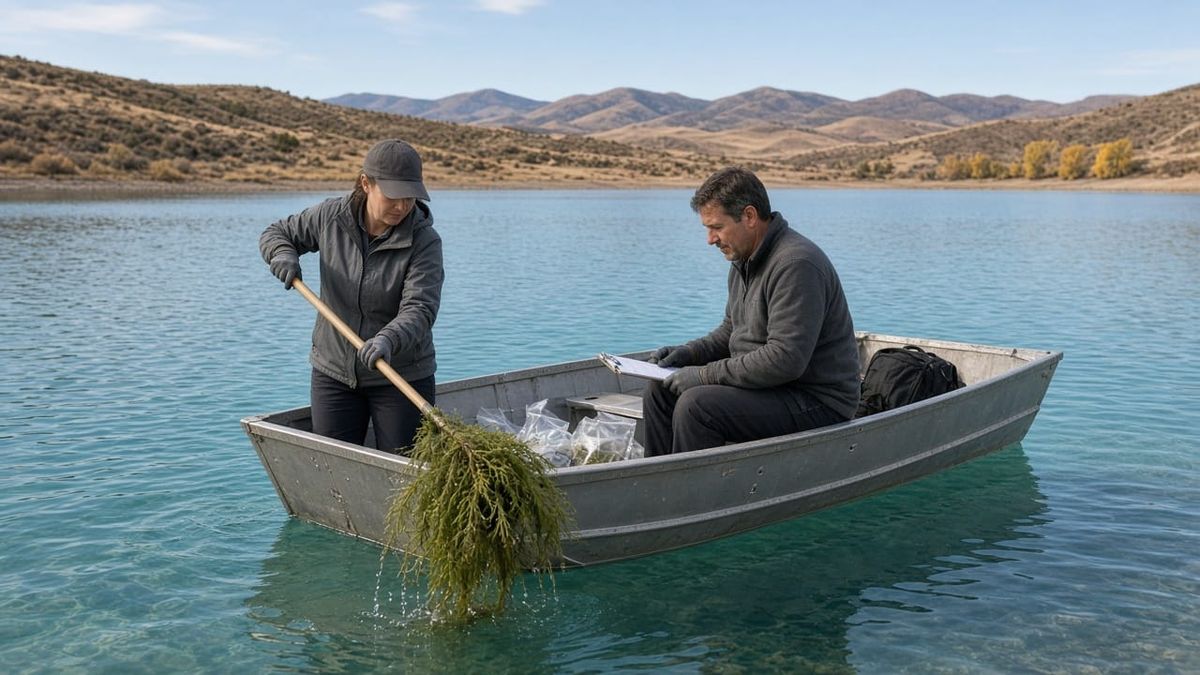
Utah State University researchers are working with the Utah Division of Forestry, Fire & State Lands to get a clearer picture of an invasive plant growing under Bear Lake's famous blue water.
The plant is Eurasian watermilfoil. It can get in the way of boating and swimming, clog boat motors, and crowd out native vegetation. It gets harder to manage when it crossbreeds with native Northern watermilfoil, which can produce hybrids that grow more vigorously and are tougher to control.
To map the problem, USU teams are pulling plant samples from around the lake with specialized rakes and analyzing them in the lab, sorting out which species are where, how much is present, and how hybridization may be affecting the spread.
That work could help resource managers decide how to control milfoil, including which herbicides to use and how much to apply. The goal isn't to wipe out every plant, but to keep invasive milfoil at manageable levels while protecting the lake's native ecosystem and recreation.
Source: Utah State University, "USU Assisting Utah Division of Forestry, Fire, & State Lands With Bear Lake Invasive Species," Nov. 12, 2026 — https://www.usu.edu/today/story/usu-assisting-utah-division-of-forestry-fire-amp-state-lands-with-bear-lake-invasive-species/